
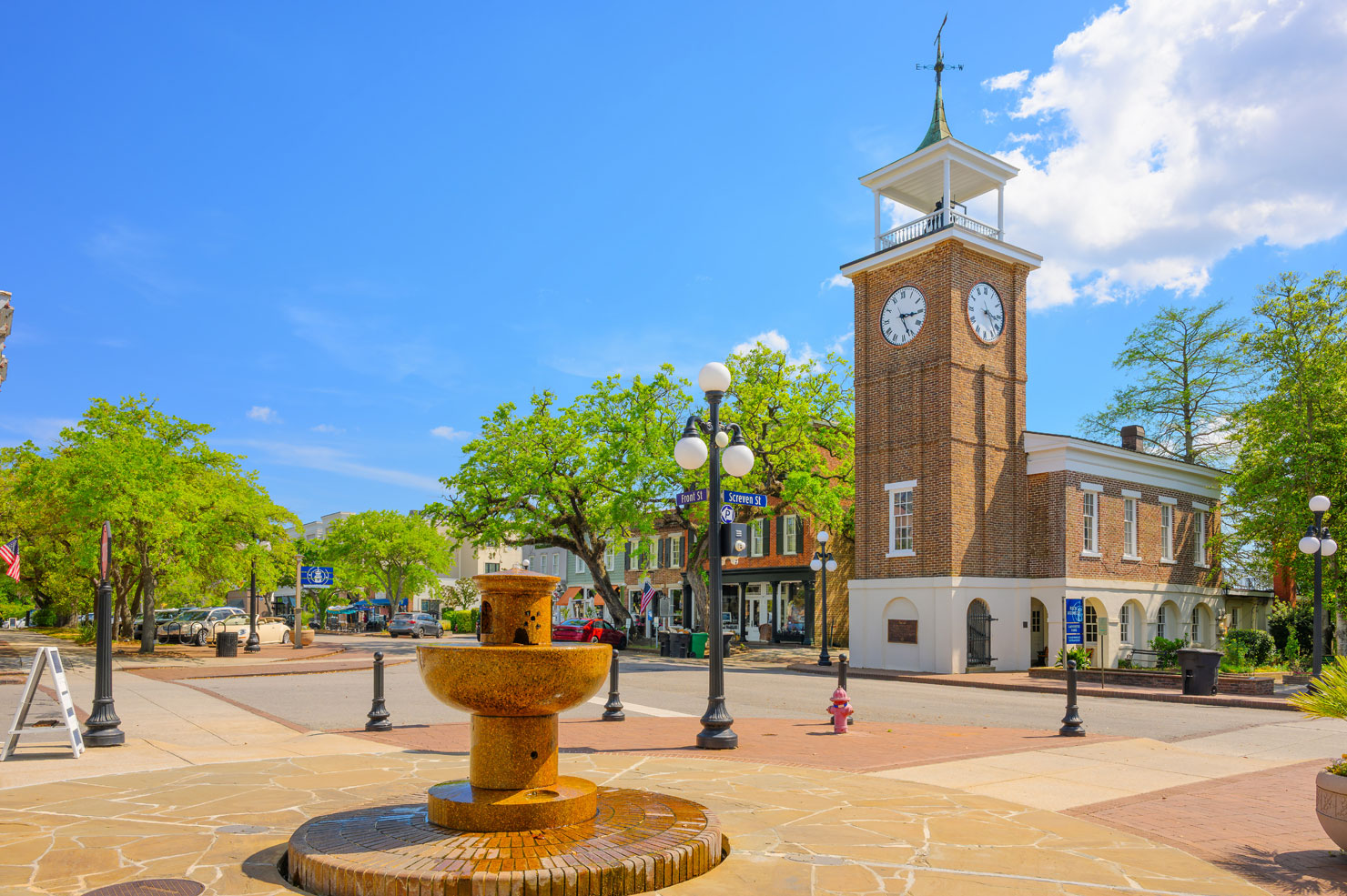
Georgetown is the third-oldest city in South Carolina, and it looks the part. The Historic District holds one of the finest collections of 18th and 19th-century architecture in the state, and the neighborhoods around it hold something almost as distinctive: housing stock that has been added to, patched, and re-plumbed by five or six generations of tradespeople.
That history is the charm. It’s also the reason plumbing in Georgetown works differently than plumbing in a subdivision built last spring.
If you own an older home here, downtown, out toward Maryville, along the Sampit, or on acreage near Andrews or Plantersville, here’s what’s worth understanding about what’s behind your walls and under your floors.
The pipe underneath probably isn’t what you think
Most older Georgetown homes have been re-plumbed at least once. Rarely all at once. What you typically find is a layered system: a stretch of original material, a 1970s repair, a 1990s bathroom addition, and a patch someone made last decade. Each section ages on its own schedule.
The materials worth knowing about:
Galvanized steel. Standard in homes built before roughly 1960. Steel pipe coated in zinc, which works well until the coating wears through and the steel underneath begins rusting from the inside out. The failure is gradual — water pressure drops, hot water runs discolored, and the interior diameter narrows until a half-inch pipe is flowing like a quarter-inch one. Galvanized supply lines generally last 40 to 70 years, which means anything original is well past due.
Cast iron drain lines. Durable and quiet, and common in homes built through the 1970s. Cast iron typically lasts 50 to 100 years, but it fails from the inside, so the outside can look fine while the pipe wall has thinned to paper. Recurring slow drains that come back after every snaking are often a cast iron problem, not a clog problem.
Polybutylene. Gray or blue flexible pipe installed widely between roughly 1978 and 1995 — which covers a lot of the additions and updates made to older Georgetown homes during that period, plus a great deal of coastal construction from that era. Polybutylene degrades from contact with treated water and fails without warning, often at the fittings. If you have it, it’s worth planning a replacement rather than waiting.
Orangeburg sewer pipe. Bituminized fiber pipe — essentially wood pulp and tar — used for sewer laterals from the 1940s into the early 1970s. It doesn’t crack so much as deform, flattening under soil load until flow stops. Homes of that era with repeated sewer backups are prime suspects.
Lead solder. Lead solder on copper joints wasn’t federally restricted until 1986. Plumbing installed before that may have lead at the joints even where the pipe itself is copper.
A camera inspection of the drain and sewer lines and a look at exposed supply lines in the crawlspace will tell you most of what you need to know in about an hour. For a house you’ve just bought or are planning to renovate, it’s the single most useful thing you can do.
The crawlspace is the real story
Most older homes in Georgetown sit on piers with a crawlspace or a raised foundation. That’s a smart response to a high water table and flood risk, and it’s why so many of these houses are still standing. But it puts your plumbing in an environment that’s humid nearly year-round.
What that means practically:
- Supply lines sweat. Cold lines running through humid crawlspace air condense constantly, and that moisture drips onto framing. Homeowners often discover what they think is a leak and find it’s condensation that’s been quietly wetting a joist for years.
- Insulation matters more here than inland. Not for freeze protection primarily, but for condensation control.
- Small leaks stay hidden longer. A dripping joint under a raised floor doesn’t announce itself the way one in a slab home does. By the time you notice a soft spot in the floor, the leak is old.
- Rodents and pests find the same pipes. Chewed insulation and disturbed lines are common findings.
If you haven’t looked under your house in a few years, that’s worth doing — or worth having someone do — before you go looking for a plumbing problem anywhere else.
Water table, flooding, and drains that run backward
Georgetown sits where the Sampit, the Black, the Great Pee Dee, and the Waccamaw all come together before reaching Winyah Bay. Much of the older residential area is low, and a substantial portion of the Historic District falls within mapped flood zones.
For plumbing, that creates two specific risks. The first is sewer backup during heavy rain, when the municipal system takes on more water than it can move and pressure finds the lowest fixture in your house — typically a first-floor shower or a basement-level drain. A backwater valve on the sewer lateral is the standard defense, and in low-lying Georgetown properties it’s worth asking about.
The second is that a high water table pushes on everything below grade. Septic drain fields saturate and stop percolating. Buried lines shift. Older sewer laterals with joints already compromised take on groundwater, which shows up as a sewer bill that doesn’t match how much water you actually used.
If you’re on a well and septic
Outside the city — Andrews, Choppee, Sampit, Plantersville, and much of the rural county — well and septic are the norm rather than the exception.
Well water in this part of the state commonly carries iron, which stains fixtures and laundry a rust color, and sulfur, which produces the rotten-egg smell most often noticed in hot water. Neither is typically a health issue, but both are fixable with the right treatment equipment, and both will shorten the life of a water heater if left alone.
Septic systems in high-water-table soil need more attention than septic systems elsewhere. Pumping on schedule matters more, and a drain field that’s saturated for weeks after a storm is telling you something.
Renovating in the Historic District? Plan the review early
Here’s the part that catches people. Georgetown’s Architectural Review Board is a seven-member appointed board that reviews the design of exterior renovations, new construction, signage, and demolition within the city’s Historic District, and any owner wanting to make an exterior alteration to a building, structure, or site in the district must apply for a Certificate of Appropriateness.
Interior plumbing work generally isn’t the ARB’s concern. But plumbing projects have a way of becoming exterior projects:
- A tankless water heater needs a vent through an exterior wall
- Relocating a bathroom may require a new vent stack visible from the street
- Backflow prevention devices, hose bibs, and exterior cleanouts all sit on the outside of the house
- Any work that involves siding removal or repair may trip a review
The Board meets monthly, and applications go through the Planning & Community Development Department. Building that timeline into your project from the start is far easier than discovering it midway through.
What to do about all of it
None of this means an older Georgetown home is a problem. These houses have lasted because they were built well and, mostly, maintained by people who understood them. It just means the diagnostic work matters more.
If you own an older home here, three things are worth doing:
- Get the supply and drain lines identified. Know what material you have and roughly how old it is. That single piece of information turns most future plumbing decisions from guesswork into planning.
- Look at the crawlspace annually. Moisture, insulation condition, and any staining on the framing.
- Address the known-bad materials on your schedule, not the pipe’s. Polybutylene and Orangeburg both fail without much warning. Replacing them when you choose to is dramatically cheaper than replacing them at 11 p.m. on a Sunday.
At Your Service Plumbing, Heating + Air works throughout Georgetown County and the Grand Strand. If you’re not sure what’s behind your walls, we’ll come out, take a look, and give you a straight answer about what you’re working with — free estimates, no pressure.
Call us or book online to schedule.
Frequently Asked Questions
How old is too old for house plumbing? It depends entirely on material rather than age alone. Galvanized steel supply lines generally last 40 to 70 years. Cast iron drains last 50 to 100. Copper can last well beyond that. Polybutylene, installed roughly 1978 to 1995, is the exception — it should be replaced regardless of how well it seems to be performing, because it fails suddenly and at the fittings.
How do I know what kind of pipe I have? Exposed lines in the crawlspace are the easiest place to check. Galvanized steel is dull gray and magnetic. Copper is reddish-brown. Polybutylene is gray or blue flexible plastic, usually with metal or plastic crimped fittings. For drain and sewer lines, a camera inspection is the only reliable way to see the condition of what’s buried.
Do I need a permit for plumbing work in Georgetown? Most plumbing work involving new lines, relocated fixtures, or water heater replacement requires a permit. Repairs to existing fixtures typically do not. If your home is in the Historic District and the work affects anything on the exterior, you may also need a Certificate of Appropriateness from the Architectural Review Board — a separate process from the building permit, with its own schedule.
Why does my hot water smell like rotten eggs? This is usually sulfur, and it’s common in well water across rural Georgetown County. The odor often comes from a reaction between sulfur in the water and the anode rod inside your water heater. Replacing the anode rod with a different material or installing water treatment generally resolves it.
Should I be worried about sewer backups when it rains? If you live in a low-lying part of Georgetown and you’ve noticed drains running slow during heavy rain, or water backing up into a first-floor fixture, it’s worth having your sewer lateral inspected. A backwater valve can prevent municipal system overflow from entering your house, and older laterals often have joint separations that let groundwater in.
What’s the first thing to check in an older home I just bought? A camera inspection of the sewer lateral. It’s the most expensive thing to fix, the hardest to see, and the most likely to be original to the house.