
If there’s one home maintenance task that gives you the biggest return for the least effort, it’s changing your air filter. It costs a few dollars, takes about two minutes, and yet skipping it is one of the most common reasons we get emergency calls across the Grand Strand every summer. Here in Myrtle Beach, where the AC runs hard from April through October and salt air is part of daily life, that little filter is working harder than most homeowners realize.
Here’s why it matters more than you’d think — and why staying on top of it is one of the smartest, cheapest things you can do for your comfort, your wallet, and the life of your system.
What Your Air Filter Actually Does
A lot of people assume the air filter is there to clean the air they breathe. It does help with that, but its main job is to protect your HVAC equipment. Every bit of air your system heats or cools passes through that filter first, and it catches the dust, pollen, pet hair, and debris that would otherwise coat the inside of your unit.
When the filter is clean, air flows freely and your system runs the way it was designed to. When it’s clogged, everything downstream has to work harder — and that’s where the problems start.
What Happens When You Let It Go
A dirty filter doesn’t just sit there quietly. It creates a chain reaction that gets more expensive the longer you ignore it.
Your system strains and wastes energy. When airflow is restricted, your blower motor has to work overtime to pull air through a clogged filter. That extra effort shows up on your power bill, and in our long, hot coastal summers, those inefficiencies add up fast.
Your coils can freeze. This one surprises people. Restricted airflow can cause the evaporator coil to get too cold and ice over, which shuts down your cooling entirely. We see this constantly during July heat waves — a homeowner with no AC on the hottest day of the year, and the culprit is a filter that hasn’t been changed in six months.
Your indoor air quality drops. A saturated filter stops doing its job and starts letting dust and allergens recirculate through your home. If anyone in the house deals with allergies or asthma — and pollen season on the Grand Strand is no joke — a fresh filter makes a real difference.
Your equipment wears out early. Every extra hour your system runs under strain is wear it didn’t need to take on. Filters are a few dollars. A blower motor or compressor is not. Regularly changing your filter is one of the simplest ways to protect that investment and reach the upper end of your system’s lifespan.
Why Coastal Homes Need to Change Filters More Often
The standard advice you’ll read online says to change your filter every 90 days. That guidance was not written for people who live near the ocean.
Here in Myrtle Beach, Murrells Inlet, and up and down the coast, a few local factors clog filters faster than they would inland:
- Salt air carries fine particles that your filter captures around the clock.
- High humidity encourages dust and airborne debris to cling and build up.
- Heavy AC runtime means far more air is cycling through the filter during our long cooling season.
- Spring and fall pollen blankets everything, and your filter catches a huge share of it.
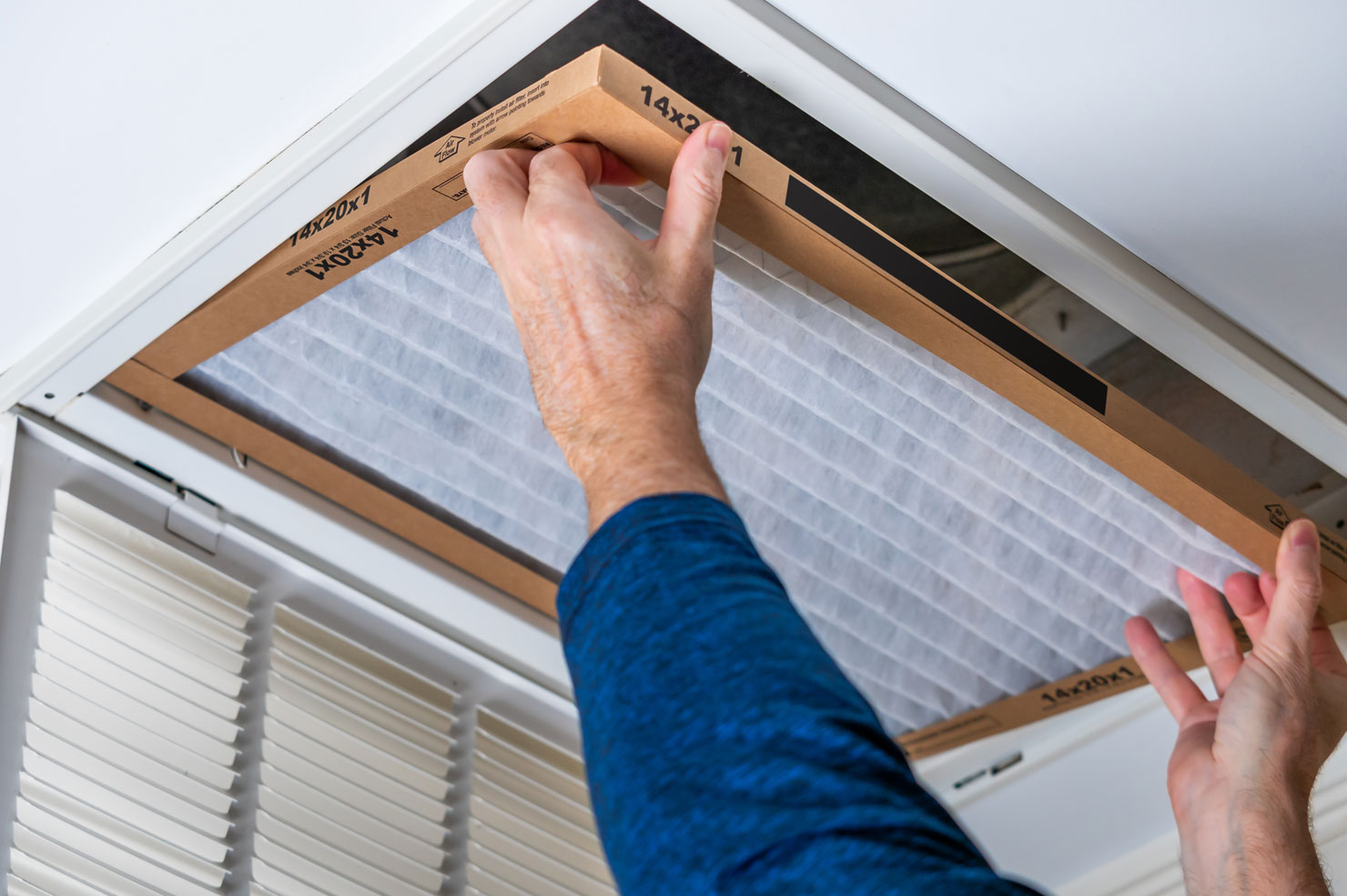
For most coastal homes, we recommend checking your filter monthly and changing it every 30 days during heavy-use summer months. If you have pets, allergies, or a house full of people during the season, lean toward the shorter end of that range. Hold the filter up to the light — if you can’t see through it, it’s time.
A Quick Word on Vacation Rentals
If you own or manage a rental property along the Grand Strand, air filters deserve a spot on your turnover checklist. Rentals see heavy back-to-back AC use all season, guests rarely think about the filter, and a frozen coil or breakdown during a booked week is a guest-experience disaster. A cheap filter swap between guests is far easier than an emergency service call in the middle of a rental week.
What About MERV Ratings?
When you buy a filter, you’ll see a MERV rating — a number that tells you how much the filter captures. Higher numbers trap more particles, but there’s a catch: a filter that’s too dense for your system can actually restrict airflow and strain your equipment, causing the same problems as a dirty filter.
For most homes, a mid-range filter strikes the right balance between clean air and healthy airflow. If you’re not sure which rating your system is built for, that’s an easy question for us to answer during a routine visit — the right filter for your neighbor’s house isn’t necessarily the right one for yours.
The Bottom Line
Changing your air filter is the rare piece of home maintenance that’s genuinely simple, genuinely cheap, and genuinely important. It keeps your energy bills down, your air cleaner, and your system running the way it’s supposed to — and it helps you avoid the kind of breakdown that leaves you sweating on the hottest day of the year.
Set a reminder on your phone for the first of the month, keep a few filters on hand, and make it a habit. Your HVAC system will thank you, and so will your power bill.
Not Sure If Your System Is Getting the Care It Needs?
If it’s been a while since your last tune-up, or you’re not certain which filter your system needs, At Your Service Plumbing, Heating & Air is here to help. We know what coastal homes along the Grand Strand demand from their HVAC systems, and we’ll make sure yours is ready for whatever the season throws at it.
Call us today to schedule your maintenance visit — and let us handle the heavy lifting so you can stay cool and comfortable all summer long.