The first genuinely cold night of the year is when most Grand Strand homeowners find out something is wrong with their heat pump. The system ran fine all summer, nobody touched it since, and then the temperature drops into the forties and the house won’t get comfortable.
Sometimes that’s a real failure. Often it’s a heat pump behaving exactly as designed while the homeowner, reasonably, assumes it’s broken. Knowing which is which saves you a service call — or tells you to make one before a minor problem turns into a replacement.
Myrtle Beach is heat pump country
Most homes from Conway to Murrells Inlet run heat pumps rather than gas furnaces, and that’s the right call for this climate. A heat pump doesn’t generate heat by burning fuel. It moves existing heat from outdoor air into your house, which is remarkably efficient as long as there’s outdoor heat available to move. Our winters rarely drop below freezing for long, so a heat pump spends nearly the entire season in its efficient range.
The trade-off is that heat pumps behave differently from furnaces in ways that surprise people, and they have more components that can fail, because the same equipment has to run in both directions.
The single most common “problem” that isn’t one
Your heat pump blows cooler air than a furnace does. That’s normal.
A gas furnace pushes air out of your vents at roughly 120 to 130 degrees. A heat pump runs closer to 90 to 100. That’s still warmer than the air in your house and warmer than the room, but it’s below body temperature — so when you hold your hand to the vent, it can feel lukewarm or even cool.
Heat pumps warm a house gradually and steadily rather than in hot blasts. Longer run times are a feature, not a symptom. If your house is reaching and holding the temperature you set, your system is working, even if the vent air doesn’t feel hot.
What is not normal: air that feels genuinely cold, a system running constantly without the house ever getting comfortable, or a thermostat that never reaches its setting.
Understanding auxiliary and emergency heat
Nearly every heat pump on the coast has backup electric heat strips built in, and the two ways they engage cause a lot of confusion.
Auxiliary heat turns on automatically when the heat pump alone can’t keep up — usually during a cold snap or when you’ve bumped the thermostat up several degrees at once. Seeing “AUX” on your thermostat during a cold morning is normal. Seeing it constantly, in mild weather, is not. That usually means the heat pump side isn’t doing its job and the backup is carrying the whole load, which is both a symptom and an expensive way to heat a house.
Emergency heat is a manual setting that shuts the heat pump off entirely and runs on strips alone. It exists for situations where the outdoor unit has failed. It is not a “heat the house faster” button, and running it as one will show up on your power bill in a way you’ll notice. If someone in your household switched the thermostat to EM HEAT last winter and never switched it back, that alone explains a lot.
What actually goes wrong
A clogged air filter. This is the first thing to check and the cause of a startling share of no-heat calls. Restricted airflow makes the system work harder, heat less effectively, and eventually shut down on a safety limit. Filters need checking monthly and changing every one to three months depending on type, pets, and how much you run the system.
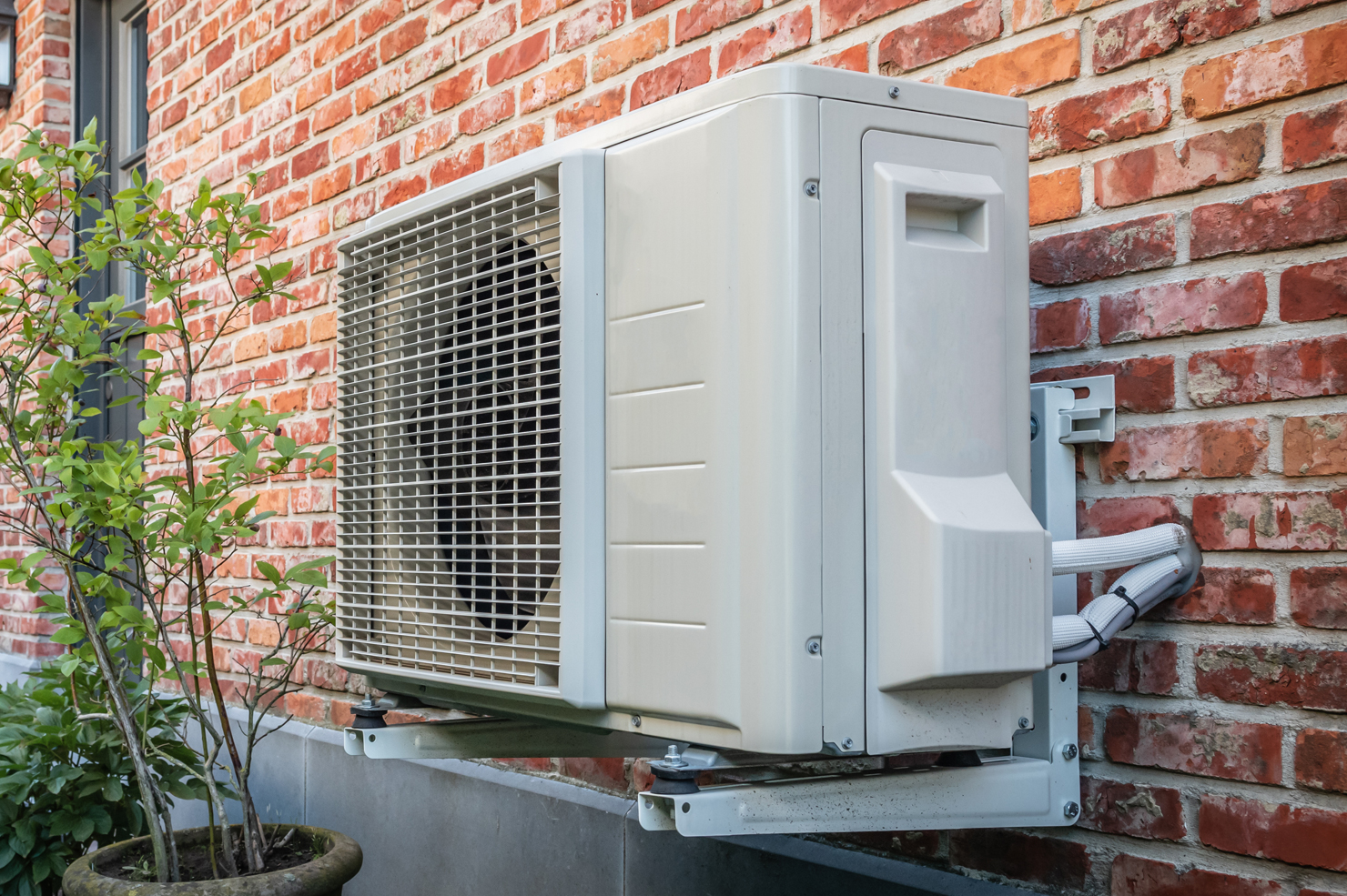
The outdoor unit is iced over. Some frost on the outdoor coil in cold, damp weather is expected, and your heat pump runs a defrost cycle to clear it. During defrost, the outdoor unit may steam, the fan may stop, and you might hear a loud whoosh as the system reverses. All normal. What’s not normal is a unit encased in solid ice, or one that stays frosted over for hours. That points to a failed defrost control, a bad sensor, or low refrigerant.
Low refrigerant. A heat pump doesn’t consume refrigerant. If the charge is low, there’s a leak. Symptoms include weak heating, ice on the outdoor unit, and the system running nonstop. This is not a homeowner repair and topping it off without finding the leak just delays the same failure.
A failed reversing valve. This is the component that lets one system do both heating and cooling. When it fails, you often get a heat pump that cools beautifully and won’t heat at all — or one stuck in the wrong mode entirely.
Salt air corrosion. This one is specific to living where we live. Homes closer to the ocean — Surfside, Garden City, North Myrtle Beach, anywhere in the salt spray zone — see measurably faster corrosion on outdoor coils, contactors, and electrical connections. Salt accelerates the breakdown of the aluminum fins and copper in the coil, which reduces heat transfer and eventually causes leaks. It’s the reason coastal HVAC equipment often doesn’t reach the lifespan it would inland, and the reason regular coil rinsing matters more here than in most markets.
Capacitors and contactors. Small electrical components that fail with age and heat exposure. A failed capacitor often means a unit that hums but won’t start. These are common, inexpensive parts — but diagnosing and replacing them involves live high-voltage electrical work and belongs with a technician.
Blocked airflow around the outdoor unit. Pine straw, leaves, landscaping that filled in over the summer, a fence that went up. The unit needs clear space on all sides to pull air across the coil.
What you can check before calling
Work through these first. Any one of them might save you a visit:
- Thermostat set to HEAT, not COOL or EM HEAT, with the setpoint above current room temperature
- Fresh batteries in the thermostat
- Air filter clean
- Breaker for the indoor and outdoor units not tripped — note that many heat pumps have two separate breakers
- All supply and return vents open and unblocked by furniture or rugs
- Outdoor unit clear of leaves, pine straw, and vegetation, with a couple feet of space around it
If all of that checks out and the house still won’t heat, the problem is inside the system.
When to stop and call
Call right away for a burning or electrical smell that doesn’t clear within an hour, any smoke, a breaker that trips again after you reset it, ice that won’t clear off the outdoor unit, loud grinding or metallic noises, or a system that’s been running for hours without the house warming up. That last one matters even when you’re technically still comfortable — a heat pump limping along on backup strips is running up your bill every hour it does.
The maintenance that actually prevents this
Heat pumps work year-round, which means they accumulate roughly twice the runtime of a system that only cools. Twice-yearly service — once before cooling season and once before heating season — catches refrigerant loss, electrical wear, and coil corrosion while they’re still small problems.
On the coast, add one habit: rinse your outdoor coil with fresh water a few times a year, especially if you’re within a few miles of the ocean. Gentle pressure, no pressure washer. It removes salt deposits before they eat into the fins, and it’s the cheapest thing you can do to extend the life of an outdoor unit here.
Frequently asked questions
Why is my heat pump blowing cold air? Most often it’s in defrost mode, which is temporary and normal, or the thermostat is set to COOL. If neither applies and the air is genuinely cold, the likely causes are a failed reversing valve or low refrigerant.
At what temperature does a heat pump stop working? Modern heat pumps keep producing heat well below freezing, though efficiency declines as it gets colder and backup heat picks up more of the load. In Myrtle Beach this is rarely a limiting factor — our winter lows almost never reach the range where a properly sized heat pump can’t keep up.
Is it normal for my heat pump to run constantly? Long run times are normal and efficient, particularly in colder weather. Running constantly without reaching the thermostat setting is not.
Should I use emergency heat? Only when the heat pump itself has failed. It runs on electric resistance strips alone, which costs significantly more to operate and won’t heat your home any faster in normal conditions.
How long should a heat pump last in Myrtle Beach? Coastal systems generally have shorter service lives than inland ones because of salt exposure. Regular maintenance and coil rinsing make a meaningful difference in where yours lands.
Why does my outdoor unit steam in cold weather? That’s the defrost cycle melting accumulated frost off the coil. It’s supposed to happen.
Heat pump repair across the Grand Strand
At Your Service Plumbing, Heating & Air services heat pumps throughout Myrtle Beach, Carolina Forest, Socastee, Surfside Beach, Murrells Inlet, Conway, and North Myrtle Beach. Whether your system has stopped heating entirely or it’s simply not keeping up the way it used to, we’ll diagnose what’s actually happening and tell you plainly what it needs.
Contact us to schedule heat pump service.